
Children learn by watching parents, absorbing far more from what they see than from what they’re told.
Kids Learn More from What They See Than What They’re Told
They are tiny, wide-eyed parrots with excellent hearing, zero discernment, and a shocking ability to repeat exactly the one sentence you hoped they’d never remember.
The Moment You Realize They’re Always Listening
Case in point: the day our bull nearly took down an entire building.
Our bull—who had apparently been training for a CrossFit competition we did not sign him up for—had grown to an impressive, intimidating size. One ordinary day, my husband Steve walked into the pole barn and saw every farmer’s nightmare: half the barn sagging like a bad posture correction poster. The massive, weight-bearing pole in the center? Knocked clean out of place. The culprit? A very large, very unapologetic bull who had clearly been feeling frisky.
Steve, doing what any calm, collected man of faith does in moments of unexpected structural failure, yelled at the bull with great emotion and volume:
“You BONEHEAD!!”
What Steve didn’t realize was that standing directly behind him—watching, listening, learning—was our youngest son Jesse, still small enough to be innocent, sweet, and devastatingly observant.
Without missing a beat, Jesse puffed out his little chest, deepened his voice to match Papa’s growl, pointed at the bull and hollered with equal passion:
“YA! YOU BONEHEAD!!”
Time froze.
The bull stood there. The barn leaned awkwardly. And Steve stood in stunned silence, staring at the tiny echo of his own outburst.
Then, with all the seriousness a father can muster when being personally exposed by child, Steve turned to Jesse and said firmly,
“Hey… we shouldn’t use that kind of language, eh.”
And in that moment, a universal parenting truth was revealed in all its glory: children learn by watching parents—even in the moments we wish they hadn’t seen.
Always listening.
And they will absolutely repeat your worst moment—loudly, publicly, and with impressive accuracy.
Children Learn By Watching Parents—The Good and the Hard Parts
We laugh at those moments because they’re cute, but then the cold realization sets in: They really are watching everything, aren’t they? This reminds me of the country song, “Watching You.”
It’s the anthem for every parent who has ever realized their child is a little sponge soaking up every habit, every word, and every “barn disaster” we think goes unnoticed.
At Gathering Grace, we talk a lot about building a home on faith, but what do we do when the reflection we see in our kids isn’t exactly… well, “holy”?

There’s a quiet kind of fear that settles in once you realize your children are paying attention to everything. Not just the Bible verses you quote or the prayers you whisper at bedtime—but the sighs, the sarcasm, the way you handle frustration before coffee. They soak it all in like little sponges, absorbing the good, the bad, and the things you hoped they missed. It’s humbling and holy all at once, this awareness that our everyday lives are shaping hearts we love more than our own. When children learn by watching parents this closely, it’s no wonder the weight of responsibility can feel heavy.
What the Bible Says About Modeling Faith at Home
"These commandments that I give you today are to be on your hearts. Impress them on your children. Talk about them when you sit at home and when you walk along the road, when you lie down and when you get up." Deuteronomy 6:6–7
This reminds us that faith isn’t meant to be taught in isolated lessons, but woven into the fabric of everyday life. When we sit at home, when we walk along the road, and yes, when life feels loud and stressful. I see this lived out most clearly in Steve.
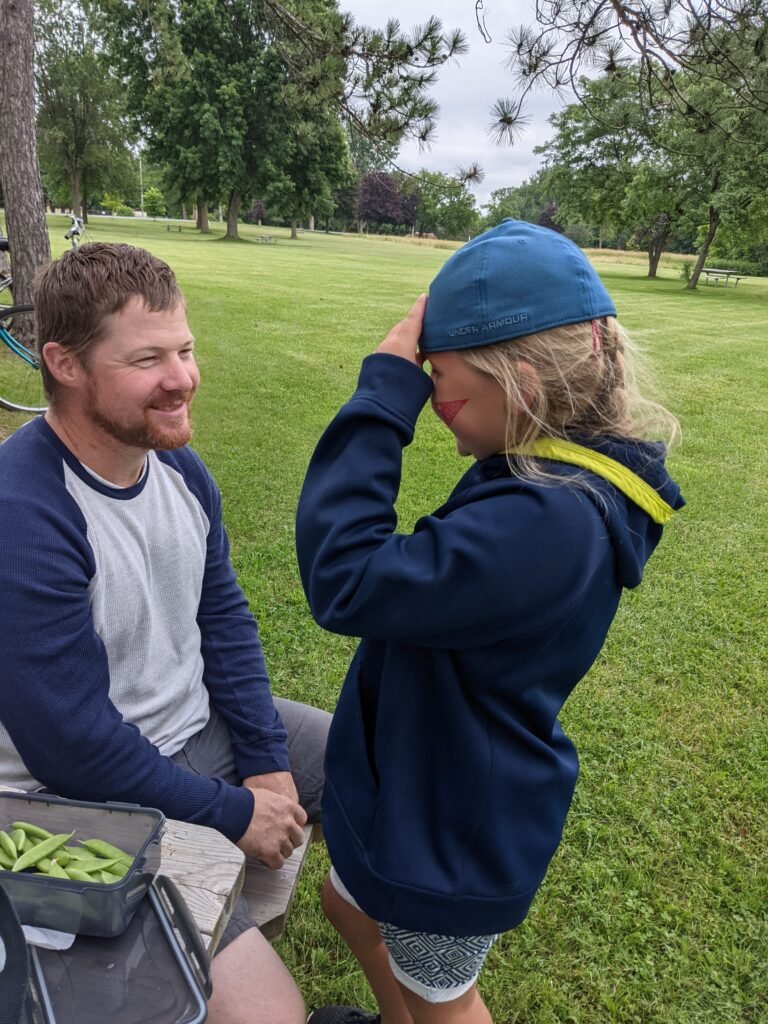
He’s not just teaching our kids how to talk respectfully or respond to everyday situations. He’s quietly showing them how to pray when words are hard to find. How to steady their hearts when pressure creeps in.
The way he pauses before reacting. The prayers he voices out loud without fanfare. Our children are learning that faith isn’t something we perform—it’s something we lean on. Without realizing it, he’s impressing God’s ways onto their hearts, one ordinary moment at a time.
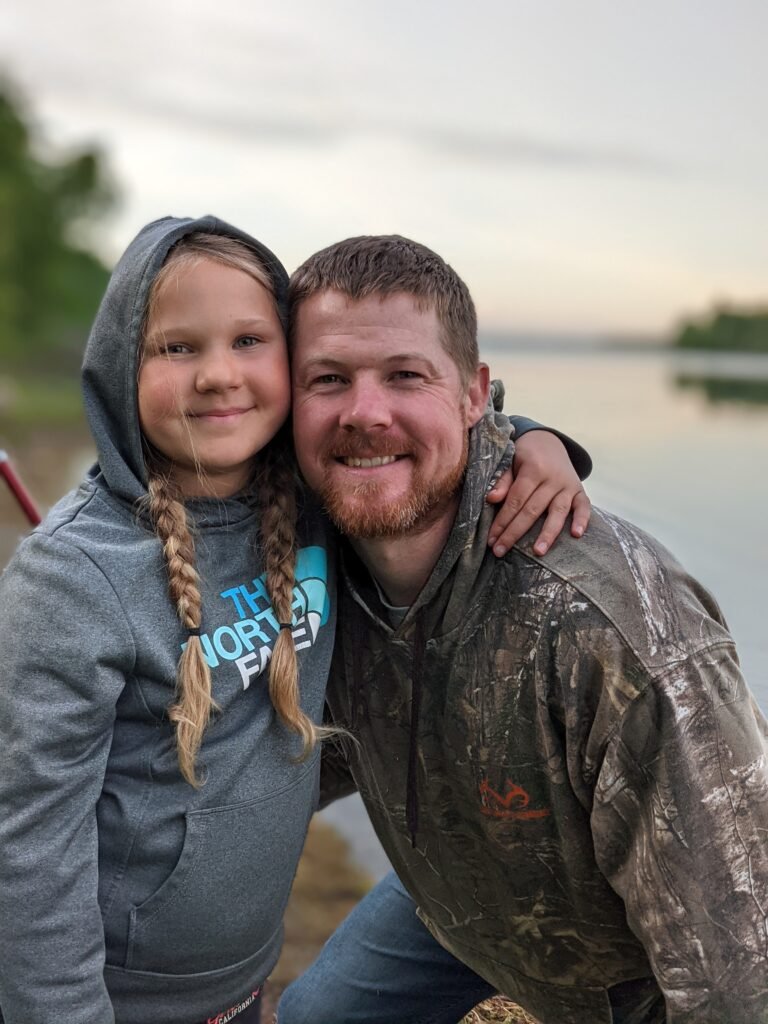
When Fear Creeps In: Am I Messing This Up?
So many of us walk around with this low-grade pressure humming in the background. The fear that if we don’t get it right, our kids won’t either. Because if they’re watching, then surely our flaws are being recorded for future playback, right? We worry that one sharp word, one impatient reaction, one messy moment will somehow become their destiny. But God never asked us to be perfect models—He asked us to be honest ones.
God Doesn’t Ask for Perfect Parents—He Asks for Faithful Ones
The goal isn’t flawlessness; it’s faithfulness. Intentional modeling means showing our children what it looks like to live a repentant life. To own our mistakes, to ask for forgiveness, and to turn back to grace again and again. When they see us repent, they learn that failure isn’t the end of the story; humility is part of it.
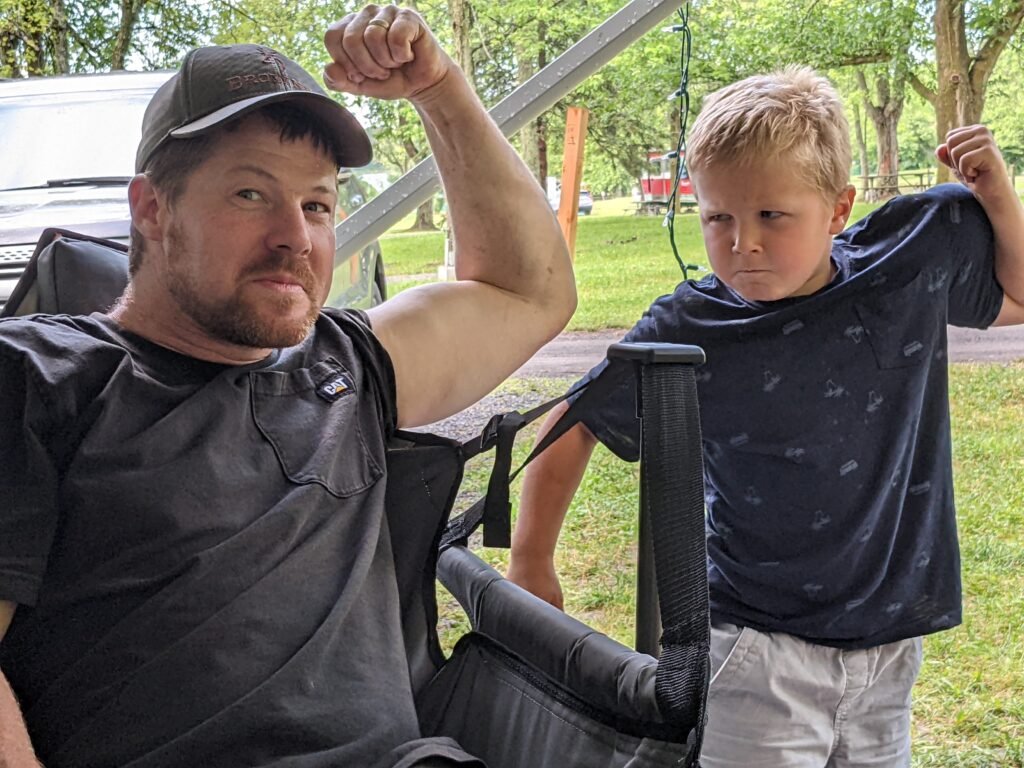
Faith That Feels Real Is Faith That Sticks
The good news is that when we live our faith simply, it naturally spreads. It looks like praying out loud while you fold laundry, letting your kids hear your honest, everyday talks with God—not polished, not perfect, just real. It shows up in the small “reaction checks,” too. Like how we handle traffic when we’re already running late. When they drop a plate after I freshly swept the floor.
Ordinary Moments That Quietly Shape Our Children
It grows deeper when we serve together. When our kids see us gathering grace for others by dropping off a meal. By offering help, choosing kindness when it costs us time. These ordinary moments quietly teach them that faith isn’t reserved for Sundays. It’s something we live out, right where we are.
Modeling Repentance Instead of Perfection
Being a godly example doesn’t mean keeping it together at all times. It means letting your children see what you do when you don’t. Model repentance by apologizing when you lose your cool, even if it’s uncomfortable. Because humility preaches louder than perfection ever could.
Invite them into your faith instead of hiding it away. Let them see you reading your Bible, praying through worries, and leaning on God in real time. And focus on the heart behind the habits. Show them why we choose kindness, forgiveness, and obedience—not just that we’re supposed to. When we live out our faith honestly, our children learn how to carry it for themselves.
A Mother’s View from the Front Row of Faith
And from a mom’s vantage point, there’s a sacred kind of watching that happens too. As I see my son wanting to be like his daddy, I’m reminded that a legacy is being built right in front of me.
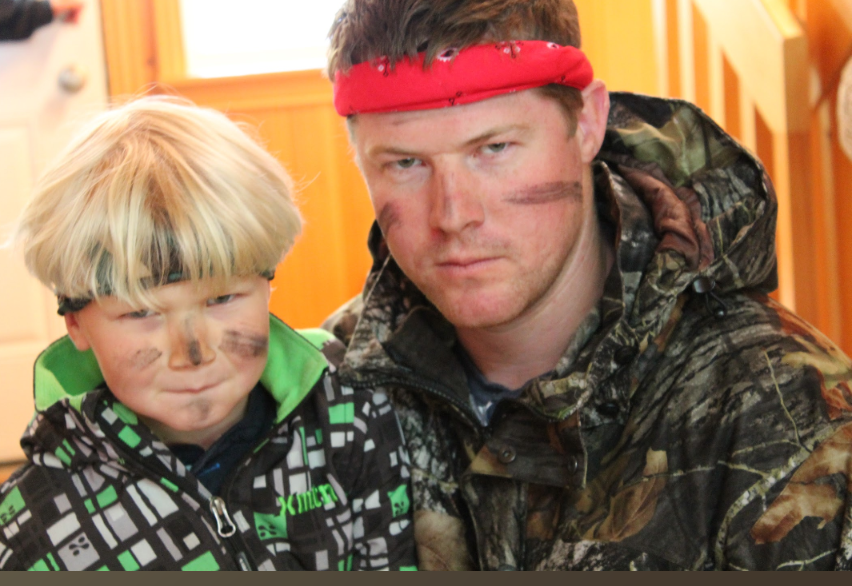
There is deep beauty in a father’s influence—the way Steve loves, leads, and lives his faith is quietly shaping our children. Much of my role happens behind the scenes: praying for that bond, covering it in grace, and trusting God with what I cannot control.
And then there’s the humbling realization that our son is learning how to treat his future wife by watching how “Papa” treats me. It’s holy ground, this front-row seat to discipleship, and it fills me with both reverence and hope.

Take a moment today to notice what your children are watching.
Not with fear or pressure—but with grace. Ask God to help you model faith in the ordinary moments, the messy ones, and even the moments you wish you could redo.
If this reflection resonated with you, I’d love for you to share it with another parent who’s trying to walk this road faithfully, one imperfect step at a time.