
There’s a moment in almost every parenting day where words hang in the air like a fork in the road.
You feel it.
You can snap… or soften.
Shame… or shepherd.
React… or respond.

And if you’re anything like me—living in the beautiful, noisy, sometimes chaotic world of homeschooling, farm chores, and raising real humans—you don’t always choose the gentle road. Sometimes the words come out sharp before wisdom even gets a chance to lace up its boots.
But here’s what I’ve been slowly, sometimes painfully, learning:
The words we use in our homes are not just passing sounds. They are shaping tools.
They build something. Or they break something.
And most of the time? We don’t even realize which one we’re doing.
Why Words Matter More Than We Think
We tend to focus a lot on behavior in parenting.
“Stop that.”
“Why would you do that?”
“How many times have I told you?”
We zero in on the outward actions because they’re loud, inconvenient, and often embarrassing, especially when they happen in public… or at church… or right when you’re trying to look like you have it all together.
But behavior is just the fruit.

Words—our words—have a way of going deeper, straight to the root.
They don’t just correct actions.
They interpret identity.
And that’s where things get serious.
Because over time, our children start to believe the story our words are telling them.
The Subtle Shift: From Correction to Condemnation
Let’s be honest for a second.
It’s incredibly easy to move from correcting behavior to labeling the child.
Instead of: “Leaving your bike in the driveway isn’t responsible.”
It turns into: “You’re so careless.”
Instead of: “That wasn’t kind to your sister.”
It becomes: “Why are you always so mean?”
We may not mean to define them… but repeated words have a way of sticking like burrs on a pant leg.
And kids don’t just hear correction.
They hear who you believe they are.
That’s a weighty thing to carry as a parent.
Grace-Filled Parenting Isn’t Soft Parenting
Let’s clear something up, because this matters.
Speaking with grace does not mean lowering standards, ignoring sin, or pretending everything is fine when it clearly isn’t.
Grace doesn’t excuse wrong.
It addresses it… but differently.

It says: “I see what you did—and it matters—but I also see you, and you are more than this moment.”
That’s a completely different tone.
And kids can feel the difference immediately.
One crushes.
The other calls them higher.
What Grace Sounds Like in Real Life
Let’s bring this out of theory and into the kitchen, the van, and the backyard.
Because that’s where parenting actually happens.
1. Grace Speaks to the Heart, Not Just the Action
Instead of: “Why did you lie?!”
Try: “Help me understand what made it hard to tell the truth.”
One shuts the conversation down.
The other opens it up.
Kids don’t need interrogation as much as they need guidance in understanding their own hearts—which, let’s be honest, they barely understand yet.
2. Grace Separates Identity from Behavior
Instead of: “You’re being so lazy.”
Try: “I know you’re capable of working hard—what’s going on right now?”
See the difference?
You’re not lowering the expectation.
You’re actually calling them up to who they are meant to be.
3. Grace is Firm… But Not Harsh
There’s a way to hold the line without raising your voice to the ceiling beams.
“I won’t let you speak that way. Let’s try that again respectfully.”
It’s calm. Clear. Unmovable.
And surprisingly powerful.
Also, let’s admit—when we stay calm, it’s often more unsettling to them than when we lose it. There’s nowhere for them to push against
4. Grace Leaves Room for Growth
Kids are going to mess up.
A lot.
Not because they’re doomed… but because they’re learning.
If every mistake is met with frustration or disappointment, they start to hide instead of grow.
But when failure is met with truth and hope?
That’s where change actually begins.
The Trap of Performance-Based Love
Here’s a hard truth most of us don’t like to admit:
We can unintentionally train our kids to believe they are loved more when they perform well.
When they obey quickly.
When they’re helpful.
When they make us look good.
And while we’d never say that out loud… our tone, our reactions, and our words can quietly communicate it.
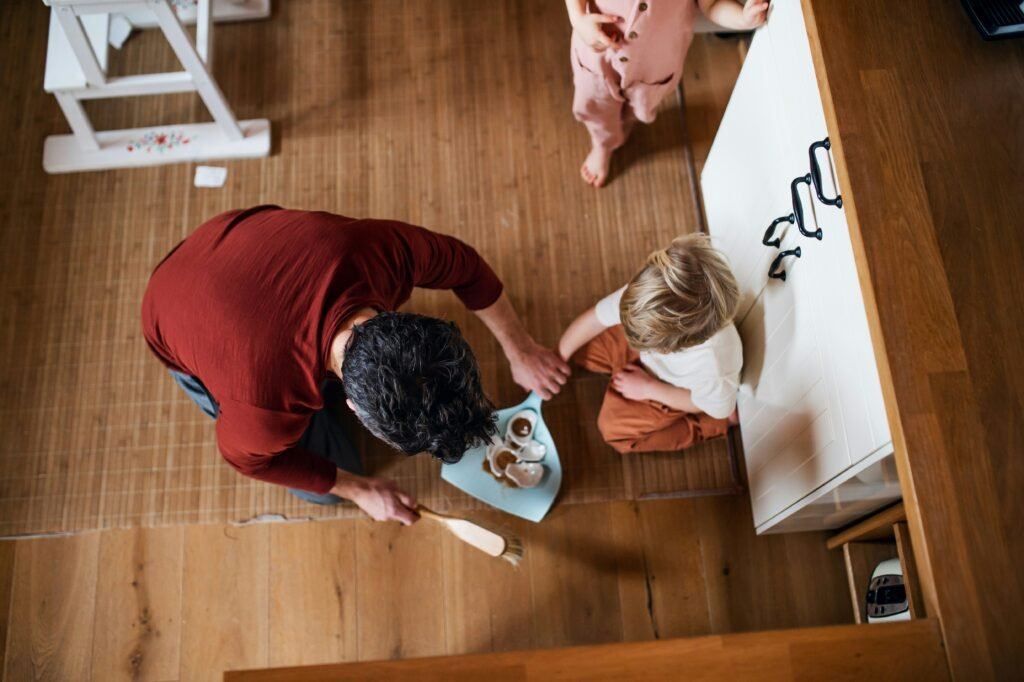
But real, lasting transformation doesn’t grow in the soil of performance.
It grows in the security of being loved—even when they fall short.
That doesn’t mean there aren’t consequences.
It just means love isn’t on the chopping block every time they fail.
When We Get It Wrong–Because We Will
Let’s not pretend we’re going to nail this every day.
Some days you’re going to be tired.
Overwhelmed.
Running on too little sleep and too much noise.
And the words will come out wrong.
Sharp. Impatient. Regretful.

Here’s the good news:
Those moments don’t have to define your parenting.
In fact, they can become some of the most powerful teaching moments in your home.
When you go back and say: “Hey… I spoke harshly earlier. That wasn’t right. Will you forgive me?”
You’re not losing authority.
You’re modeling humility, repentance, and restoration—things your kids need far more than a flawless parent.
Building a Home Where Grace Is Heard
If you step back and listen to the tone of your home for a day… what would you hear?
More correction than encouragement?
More frustration than patience?
More pressure than peace?
Don’t spiral—just notice.
Because small shifts in our words can slowly reshape the entire atmosphere.
Here are a few simple ways to start:
- Catch them doing something right and say it out loud
- Replace labels with observations
- Pause before responding
- Ask questions instead of assuming motives
- Speak hope into their struggles
It’s not about perfection.
It’s about direction.
The Long Game of Parenting
We’re not just raising kids who obey while they live under our roof.
- We’re raising future adults.
- Future spouses.
- Future parents.
- Future people who will have an internal voice shaped, in part, by ours.
And one day, when they mess up—and they will—what will that inner voice sound like?
Will it condemn?
Or will it guide them back with truth and grace?
That voice is being formed right now… in everyday conversations that feel small but aren’t.
A Gentle Challenge From One Imperfect Parent to Another
Next time you’re about to respond—whether it’s to a spilled chore, a sibling squabble, or yet another “I forgot”—pause for just a second.
Ask yourself:
“Am I about to build… or break?”
You won’t always get it right.
I certainly don’t.
But the more we lean into grace—not the fluffy, passive kind, but the steady, truth-filled kind—the more our homes become places where hearts are shaped, not just behavior managed.

And that’s the kind of legacy worth building.
Even on the messy days.
Which word choice has shaped your child’s heart the most? Let’s connect in the comments.
I keep wondering how one can parent a child without yelling but also without gentle parenting… this answered that question a lot!!